
Looking for bathroom window options? Why choosing obscured glass maintains your privacy – and your daylight
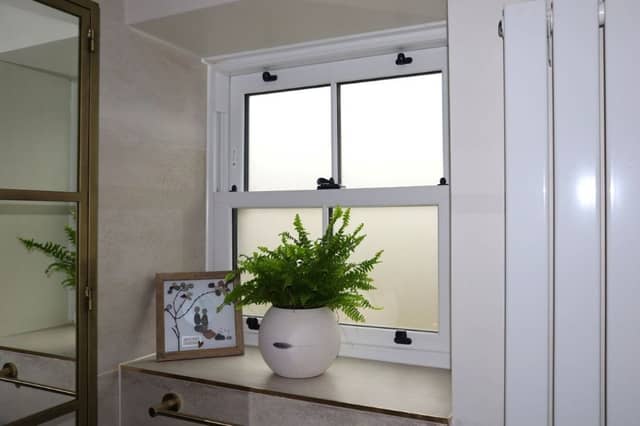

If you want glazing that keeps part of your home private, our guide helps you navigate the options on offer.
Most of us know the feeling. You step out of the shower and realise the bathroom window looks straight across at the house next door, or you answer the front door and notice how much of your hallway someone could see into.
Clear glass is lovely for views and daylight, but there are parts of a home where it simply shows too much.
The usual answer is obscured glass, which scatters light so that shapes and detail on the other side become blurred. It is a broad family of finishes rather than a single bathroom option and each one changes both how private a room feels and how the window looks from outside.
What reeded glass actually is
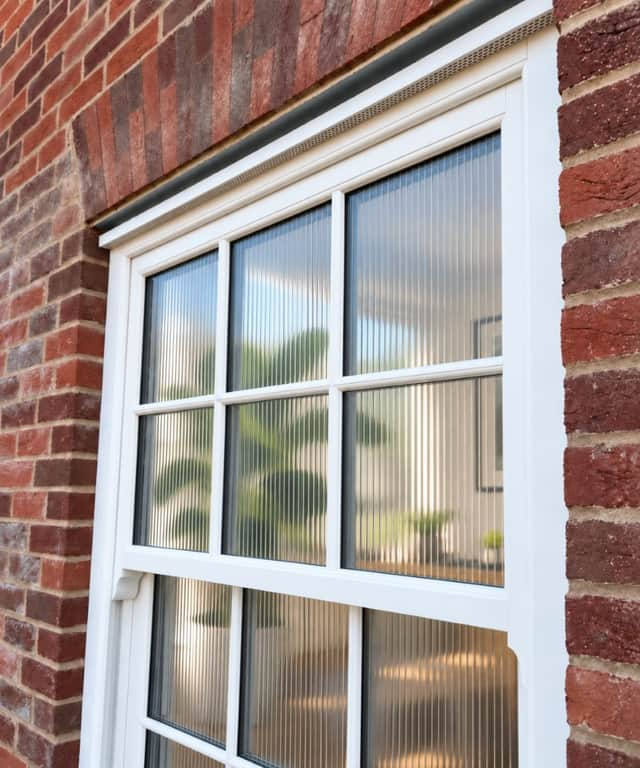
Reeded glass has a series of fine, parallel ribs running across its surface, usually vertically, so it looks a little like a row of narrow glass rods set side by side. Each rib bends the light slightly, breaking the view behind it into soft stripes of colour and shadow. You can tell someone is there, and you might make out the colour of a towel or a coat, but faces and fine detail are lost.
The regular pattern looks cleaner and more ordered than many older obscured designs and plenty of light still comes through, so the room doesn't feel closed off.
Reeded glass obscures rather than conceals, though. Privacy depends on the width and depth of the ribs, how close someone stands to the glass and how bright it is on each side, so you can’t assume that nothing will be visible.
How it compares with other finishes
Smooth frosted glass, sometimes sold as satin, has an even, milky finish with no pattern at all. It gives a soft, uniform glow and suits rooms where you want the glass to fade into the background. Traditional patterned obscure glass goes the other way, with textures that might resemble stippling, tree bark or leaves. These vary widely in how much they hide, so two obscured windows can behave quite differently.
Reeded glass sits in between, with more character than plain frosting but less fuss than many decorative patterns, which can suit homeowners who want privacy glazing that looks deliberate rather than purely functional.
Where obscure glazing earns its place
Bathrooms are the obvious starting point, though needs differ. A first-floor window overlooking a garden may need only a light pattern, while a ground-floor window beside a footpath could call for something far more obscuring. Where a shower or bath sits right next to the glass, a high-privacy finish is usually wiser than one picked mainly for looks.
Front doors and the narrow-glazed panels beside them, often called sidelights, are another good fit, letting daylight into what can be a dark hallway while stopping passers-by from seeing straight in. Side-facing windows on landings or in downstairs cloakrooms, where a neighbour's wall is only a few metres away, can benefit in the same way.
Finishes vary between manufacturers, so ask early which apply to the window or door you have in mind. Quickslide, a West Yorkshire manufacturer of heritage-style uPVC sash windows, now offers reeded glass across its entire range of windows and doors, so one finish can run through different openings in a home if that suits the design.
Look closely before you decide
A small photograph tells you very little about privacy. Where possible, ask to see a physical sample and hold it up at different distances. Put your hand against the far side, then step back and see how quickly it blurs away. Ask the supplier how each finish compares for privacy.
Think about the evening, too. When it’s dark outside and your lights are on indoors, silhouettes can be much more visible through the glass than you might expect.
Pattern and performance are separate matters, too. Warmth depends on the glazing unit itself, such as double glazing with a Low-E coating that helps control heat transfer, while safety depends on whether toughened or laminated glass is specified. The reeded texture affects appearance and privacy rather than insulation or security.
Matching the glass to the house
The finish you choose changes the character of a window almost as much as the frame does. Reeded glass can sit comfortably within heritage-inspired designs, including uPVC sliding sash windows, where its vertical lines echo the upright proportions of the frame. That doesn't make it historically accurate, and some period homes may suit a plainer finish. If you live in a listed building or a conservation area, check with your local council before changing windows or doors.
The most satisfying results tend to come from treating each opening on its own terms. A bathroom, a front door and a landing window all ask something slightly different of the glass, and choosing room by room, with a sample in your hand, usually gives you a home that feels private where it needs to be and stays full of light.
To find out more, visit the Quickslide website.