
Poundland crisis: Harrogate store's future up in air again as reports surface of 'disquiet' at parent company
“New reports that the Poundland empire in the UK and Ireland may fall into administration have emerged”
The future of a Harrogate store is looking uncertain once again as its parent company faces a renewed possibility of collapse.
New reports that the Poundland empire in the UK and Ireland may fall into administration have emerged after a reported dispute amongst the management of the US-owned retail giant.
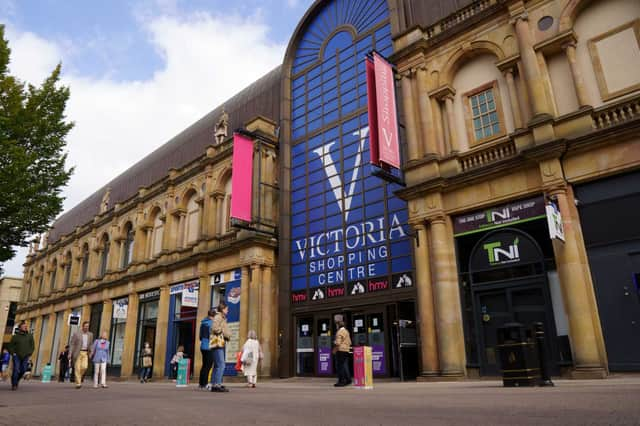
Despite a nervous last 13 months, up to now, Poundland store in Harrogate has so far escaped the threat of closure and remains open and trading at Unit 12-13 on the ground floor of Victoria Shopping Centre.
But Sky News is now reporting that Poundland Directors Andrew Kirkpatrick, Stephen Welch, and Dominic Young had expressed “disquiet” at apparent efforts to manoeuvre Poundland towards an insolvency process by its owners Gordon Brothers has raised doubts over its survival.
If the high street chain were to enter insolvency in the next few days, it could put at risk all of the 600 stores and 12,000 jobs in the wider company.
Sky News is reporting that the dispute is said to centre around the shareholder's decision to reject an offer to buy the company from Martin Property Group, an Irish property firm, leaving Poundland increasingly likely to be broken up after being placed into insolvency proceedings.
Recent years have seen Poundland engulfed in financial turmoil, despite rescue bids, closures and restructures.
A leading insolvency expert says the topsy-turvey saga of Poundland shows the complicated situation now facing Britain’s retail sector, even for those still generating strong revenues.
Molly Monks of Parker Walsh, said: “Poundland’s situation highlights a difficult reality for discount retailers: being popular with cash-strapped shoppers does not automatically make a business financially viable.
“Customers may be trading down, but retailers still have to cover wages, rent, energy, distribution and supplier costs.
“If those costs rise faster than a business can generate sustainable margins, high sales volumes alone will not protect it.”
The details of any rescue bid for companies such as Poundland are crucial, she added.
“The difference between rescuing a business and selling off its assets can be enormous for employees, suppliers and the communities that depend on its stores,” said Molly Monks of Parker Walsh.
“A buyer taking on the business as a whole may be able to preserve more of its value, including jobs, supplier relationships and the brand itself.
“However, a rescue needs more than a new owner.
“It requires credible funding and a realistic plan to make the business sustainable.”
More on Parker Walsh here