
Rare fungus found in Nidderdale for first time after dry summer
Rare fungus discovered in Nidderdale
A nationally rare fungus has been discovered in Nidderdale for the first time, just weeks after an appeal for people to look out for it following this year’s unusual weather.
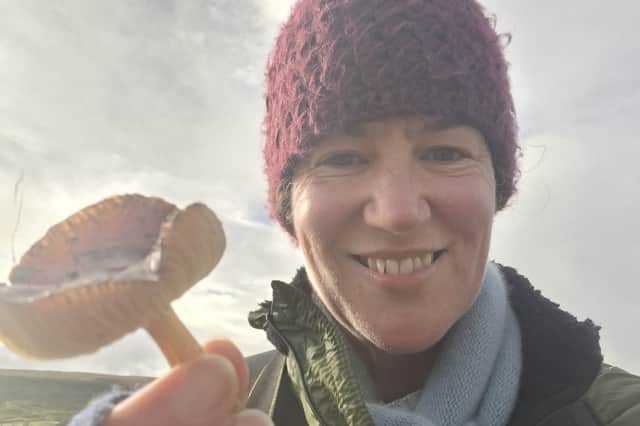

The date waxcap, Hygrocybe spadicea, was found by Nidderdale National Landscape biodiversity officer Dr Kelly Harmar during a grassland fungi survey on 21 October.
The distinctive fungus, which has a dark brown cap and bright yellow gills and stem, is classified as Vulnerable on the IUCN Global Red List.
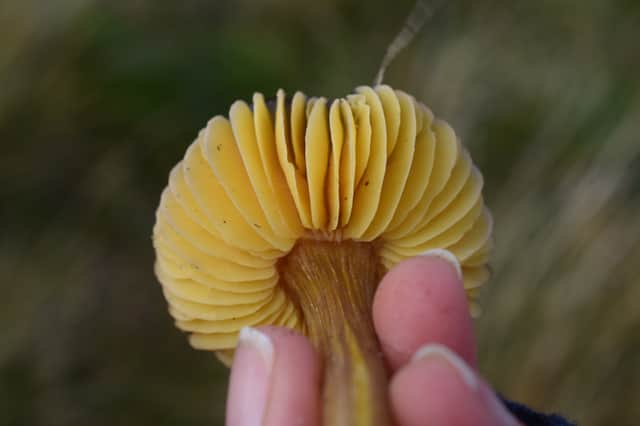
Its discovery is the first recorded sighting in Nidderdale and comes during an unusual autumn in which date waxcaps have been reported at several sites across Britain.
The species is widespread but rarely recorded in the UK, with its irregular fruiting making it difficult to establish how common it really is.
Kelly made the discovery within ten minutes of starting her survey that day, having already spent three days surveying the site.
She said: “I was absolutely over the moon. We had been encouraging people to look out for date waxcaps because of the unusual conditions this year, but finding one myself was a wonderful surprise.
“I’d spent three days surveying this site and then there it was, just ten minutes into the latest visit.
“It is a beautiful, distinctive fungus and to have the first record for Nidderdale is really exciting.”
The discovery follows an exceptionally dry summer which appears to have affected the fruiting patterns of grassland fungi.
While many waxcaps were slow to appear because of the lack of rainfall, date waxcaps have been reported from several parts of the country, including sites where they have not been seen for many years.
However, experts are still uncertain why the species appears to be having a particularly good year.
Kelly said: “There is evidence that date waxcaps can appear more frequently following dry summers, and there have certainly been more reports than usual this autumn.”
One possibility is that conditions have been particularly favourable for the species.
Another is that drought has placed it under stress, encouraging it to produce fruiting bodies to reproduce. Neither explanation has yet been established.
The discovery adds to growing evidence of the importance of Nidderdale’s long-established grasslands for rare fungi.
Specialist surveys at three sites last autumn recorded 45 species of grassland fungi, including 25 species of waxcaps.
Two sites were assessed as internationally important for their grassland fungi and a third as nationally important.
This autumn, Nidderdale National Landscape is continuing expert surveys and investigating new sites to build a better picture of the fungi found across the protected landscape.
The discovery suggests the grassland where the date waxcap was found could be an important habitat for waxcaps and other grassland fungi.
The survey work is also helping inform future grassland restoration.
Grassland officer Joseph Haywood is surveying sites being considered for restoration or enhancement in 2027 through the Nidderdale National Landscape Grasslands Project, a partnership with Yorkshire Dales Millennium Trust, which funds his role.
The three-year project aims to restore or enhance around 50 hectares of grassland each year.
Public encouraged to keep looking Nidderdale National Landscape is encouraging farmers, landowners and members of the public to continue looking out for date waxcaps and other grassland fungi this autumn.
The date waxcap has a distinctive dark brown cap with contrasting yellow to orange gills and stem.
Anyone who thinks they have found one should take clear photographs showing the cap, stem and underside, record the precise location and date and leave the fungus undisturbed.
Suspected date waxcap sightings should be emailed to [email protected].
Other grassland fungi sightings can be recorded through Plantlife’s national Waxcap Watch survey, which runs until late November. https://www.plantlife.org.uk/waxcapwatch/