
Harrogate bodies warn of mental health challenge for people with ADHD or autism
Groups warn of mental health challenges when living with ADHD or autism
Harrogate’s Evolve Psychology and Mind in Harrogate District are collaborating to explore the relationship between neurodiversity and mental health.

With neurodevelopmental assessment provider, Evolve Psychology and Mind in Harrogate District, both being instrumental in supporting the mental health of neurodivergent people in and around Harrogate, they have joined forces to raise awareness of the fact that neurodivergent people – including those with ADHD and autism – are more likely to face mental health difficulties.
Through guest blogs and social media, Mind and Evolve aim to help neurodivergent people in the area to understand both why they might be more vulnerable to poor mental health and how to look after their wellbeing.
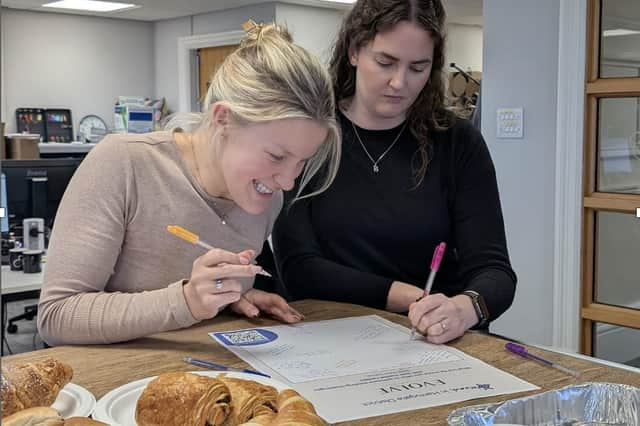
Evolve also supported Mind’s ‘Big Brunch’ fundraising campaign at its head office in Windsor House. From bacon to brioche, Evolve colleagues brunched while sharing their favourite mental wellbeing tips, raising more than £100 in support of Mind in Harrogate District’s work, looking after the mental health and wellbeing of the local community.
Holly Astbury, Head of Workplace Wellbeing at Mind in Harrogate, said: “Many neurodivergent people experience anxiety, depression, stress and burnout, often because they are navigating environments, systems and expectations that were not designed with their needs in mind.
“At Mind in Harrogate District, we regularly hear from people who have spent years feeling overwhelmed, exhausted or different before recognising that neurodivergence may be part of their story.
"Whether someone has a formal diagnosis or is simply beginning to explore their experiences, understanding the connection between neurodivergence and mental health can be an important step towards protecting their wellbeing.”
Kate Crawford-Blake Head of Training, Research & Development, at Evolve Psychology adds: “The challenges neurodivergent people face, living in a neurotypical world, make it important that they look after their wellbeing.
"This can look different from how other people look after themselves, and that’s fine. From protecting themselves from sensory overload, to managing their energy and outsourcing executive function demands such as time management, people with ADHD and autism should view giving themselves what they need as powerful step in protecting their long-term health.
“I can’t stress enough that it’s really important to support the difficulty, not the label. People wondering about, or waiting for, a diagnostic assessment, mustn’t put their wellbeing on hold until a report arrives.
“It's also worth knowing that a good deal of support, both in healthcare and at work, is based on how a difficulty affects daily life, not on whether it has a formal name attached – even if people tend to assume otherwise.”