
11-year-old's story sparks educational revolution as boys rediscover love of writing
As educators nationwide grapple with a growing literacy gap that sees boys twice as likely to fall behind in writing by age 11, an innovative solution has emerged from an unexpected source: an 11-year-old boy and his mother's Friday evening storytelling sessions.
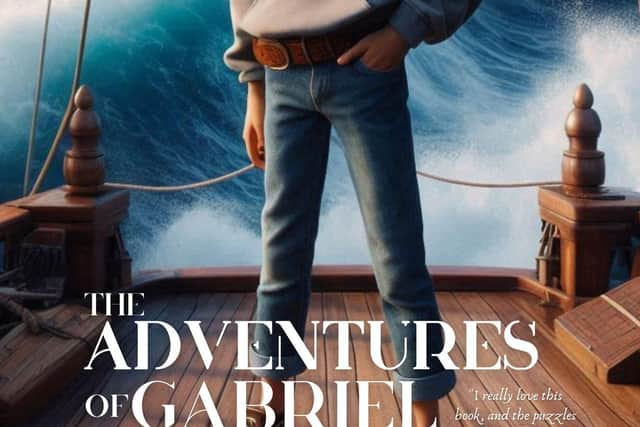
The Adventures of Gabriel, co-authored by Gabriel Khan and his mother Kate Markland, has sparked a groundbreaking literacy initiative that demonstrates how imagination-led learning can transform reluctant writers into enthusiastic storytellers across the UK.
The Crisis: Boys Left Behind in Literacy
Recent research paints a concerning picture of male literacy across the UK:


- Boys are now twice as likely as girls to fall behind in writing by age 11 (Education Endowment Foundation, 2022)
- Writing was the most severely affected subject across primary and secondary schools post-pandemic
- Oracy skills have declined significantly, with many pupils struggling with verbal confidence and expressive speech (Voice 21 & University of Oxford, 2022)
"We've built environments where children, especially boys, are over-assessed, over-labelled, and under-listened to," explains Kate Markland. "They know when they're being asked to perform rather than create."
A Mother-Son Solution Goes Nationwide
What began as a way to help Gabriel process emotions has become The Adventures of Bradford, a groundbreaking literacy initiative delivering remarkable results and attracting interest from schools across the country:
Immediate Impact:
- 90% completion rate among participating pupils
- Reluctant writers staying behind voluntarily to continue their stories
- Teachers reporting the most enthusiastic writing sessions they've ever witnessed
"Even the kids who don't like writing — they didn't want to leave. They asked if we could do it again tomorrow," said one Year 6 teacher.
"I believed in myself so I could create things I didn't even know I could do," reflected a Year 6 pupil.
Breaking Down the Barriers
The programme addresses four key factors contributing to boys' literacy struggles:
- Screen saturation reducing opportunities for verbal creativity
- Lack of male literacy role models in primary education
- Assessment-heavy curricula that prioritise structure over imagination
- Emotional literacy gaps making it harder to connect language with feelings
The Adventures of Gabriel counters these challenges by providing:
- A safe creative space for emotional exploration through characters
- Male-led narratives that feel relatable and empowering
- An intergenerational storytelling model
- The flexible StoryQuest™ framework for easy replication in any school
From Family Story to National Recognition
The book, illustrated by Gabriel's grandfather and inspired by stories from his Bradford-born grandmother, represents a powerful blend of family tradition and modern innovation. Its success has caught the attention of educational leaders nationally and internationally.
The project has been accepted for presentation by:
- British Psychological Society Conference (2024)
- The Canadian Teachers Magazine (2025)
- European Conference on Education (ECE2025)
A New Paradigm for Learning
"Normally the teacher tells us what to do. But this time we were free," noted a Year 5 participant, capturing the essence of the initiative's success.
"Too often, boys are asked to write and speak in ways that don't feel natural to them," Markland observes. "But when we use imagination, humour, and heroism, they light up. Storytelling becomes a gateway, not a chore."
In an education system focused heavily on assessment recovery post-pandemic, The Adventures of Gabriel offers a compelling alternative: a return to imagination, emotional connection, and purpose-led learning that puts the joy back into literacy.
National Expansion Opportunities
Schools and local authorities across the UK are now expressing interest in implementing the StoryQuest™ framework. The programme's flexibility allows it to be adapted to different communities while maintaining its core principles of student-led creativity and emotional engagement.
Initial discussions are underway with education departments about potential regional pilot programmes, offering hope for addressing the literacy crisis on a larger scale.
Looking Forward
As the programme prepares for further rollout, Markland's vision extends beyond test scores and curriculum targets:
"Storytelling isn't just a tool for literacy. It's a tool for life. And for boys especially, it may be one of the few spaces where learning, feeling, and expression come together naturally. Through narrative, children make sense of the world around them and their place within it—they explore identity, work through problems, and develop their capacity to communicate complex emotions and ideas. When we give boys permission to tell their own stories, we're not just improving their writing; we're helping them develop essential life skills that will serve them across every domain of their future."