
Top philosopher to appear at Raworths Harrogate Literature Festival with positive message in era of extremes
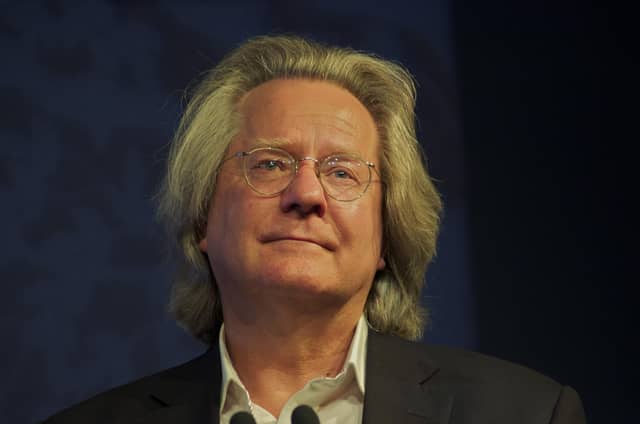

This may not be the best of times to be a philosopher but one of Britain’s greatest is coming to Harrogate with a message of hope.
In a world of polar extremes, Professor AC Grayling will be talking about his new book Discriminations: Achieving Peace in the Culture Wars at the Raworths Harrogate Literature Festival.
Speaking at the Crown Hotel on Thursday, October 9 at 8.30pm, the founder and principal of Northeastern University London will attempt to show what lies beneath the froth and fury and how to navigate towards a better future.
"Cancel culture is a case of a bad own goal,” said Grayling who boasts family roots in Yorkshire and is a big fan of Harrogate’s civilised nature.
"In claiming the right to a fairer place in society, you have to afford everyone else their rights, too.
"We are being pushed into only looking at the extreme things people say or do.
"But, if you dig below all the noise, you will find it is the same struggle that has been fought since the Second World War, the fight for greater social justice and equality.”
Famed for previous books including The God Argument (2013) and What Is Good ? (2010), these are different times from the 1950s or 60s when great thinkers such as Bertrand Russell or Norman Mailer appeared on TV chat shows as if they were film stars.
"Britain is no longer like France where philosophers are always turning up on TV and pontificating,” he said.
"In the 1950s, the BBC Third Programme often had philosophers in discussions on the radio.
"It was easier for TV to aspire to educate people when there were only four channels.
"Now there are hundreds and they are all trying to attract people to watch.
"Philosophy isn’t to everybody’s taste but I think we could take a leaf out of the French’s book on this one.”
Today, Grayling and, perhaps, Richard Dawkins are as close to household names as philosophy gets, possibly because both are happy to cross the border of academia into the wider world.
Whether that means Grayling’s rational brand of humanism can cut through the inflammatory emotions of popular discourse, such as it is, is another matter.
His latest book looks at the entire history of cancellation, from ostracism in ancient Greece to witch trials and the House of Un-American Activities during the McCarthy era in the 1950s.
Never a man just to analyse and describe, Grayling retains the hope his life’s work will help pull civic debate onto the safer ground of reason and tolerance, even as he acknowledges the right wing drift of politics amid the pernicious echo chamber of modern social media.
"In an era when the debate is distorted and everyone is caught up in the furore and fireworks, what remains at the core is addressing questions that are perennial such as discrimination and people’s rights.
"There is an enormous amount of pushback from the far right but some of the things ‘woke’ people say make one’s eyebrows rise.
"We need not to be one-eyed about things.”
Perhaps closer to the Enlightenment than the 21st century, this popular author and thinker is not only a humanist and an atheist but also an optimist.
"It’s about doing what is right but the closer society gets to that, the more angry the reaction.
"In the long pulse of history, things have improved inch by inch.
"That is what it is all about.”