
‘Sebastian could have been saved’: Family’s six-year fight for answers over 25-year-old’s pancreatitis death in Harrogate District Hospital
The family of a 25-year-old man who believe his death in hospital could have been prevented have spent years trying to uncover the facts – now they are speaking publicly for the first time. Chris Burn reports.
For six painful years, Adrienne Erkulis and her father Dr Alan Crew have been attempting to get answers about the death of her son Sebastian in Harrogate District Hospital in a shared belief his life could have been saved.
They allege a sedative he was given for 11 days was not properly monitored and made his underlying illness worse while an operation that could have meant it was no longer required was delayed. But the hospital trust says an external assessment found care and treatment given to Sebastian was “appropriate”.
After exhausting attempts to get a formal investigation to take place and feeling they have been let down by the medical system, Sebastian’s mother and grandfather are now speaking to The Yorkshire Post in the hope of raising awareness of the circumstances of Sebastian’s case and potentially preventing deaths in similar future cases.
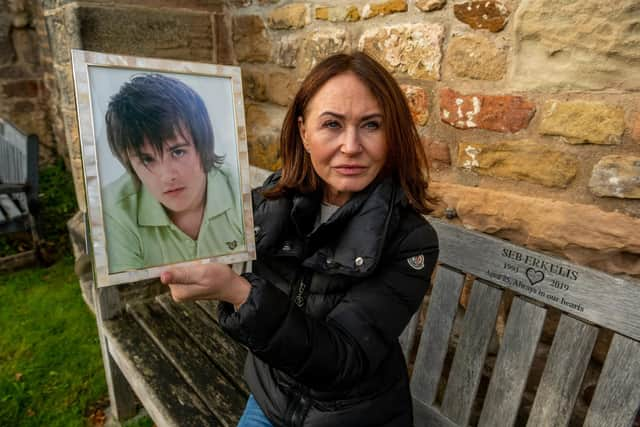

“I just want to think at least he hasn’t died in vain,” says Adrienne. “I feel our story should be heard and maybe other people will come forward.”
Adrienne says her son was “very intelligent, loved animals and was so kind with a wicked sense of humour” but his life was not without its challenges. He was diagnosed with ADHD at 18 and became a heavy drinker. His mother says he used alcohol as a coping mechanism for his social anxiety and would call it “liquid courage”.
Adrienne says Sebastian had “dramatically cut down” his drinking with a GP’s support in the months before his admittance to hospital. She says he was moving forward with life, getting a role looking after animals at Harewood House and preparing to move into a house with his brother.
It was April 25, 2019, when Sebastian rang his mother to say he was suffering with severe stomach pain. She says she made what she now considers “to be the biggest mistake of my life” and drove him to Harrogate District Hospital as the easiest local hospital for her to visit if he needed an operation.
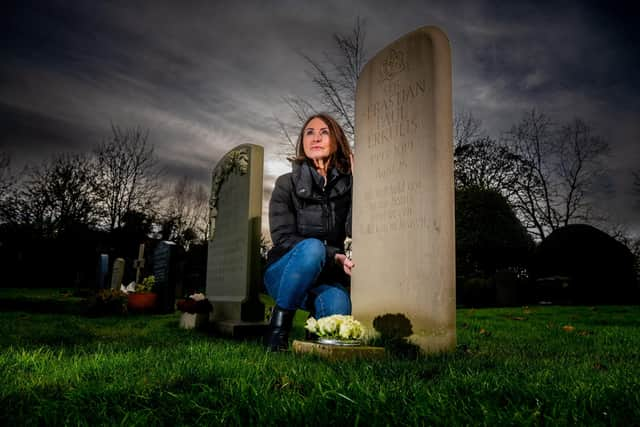
The hospital has since said he was diagnosed with either gastritis or acute pancreatitis – a condition most commonly caused by gallstones or excess alcohol. But other causes include high blood fat levels – a condition known as hypertriglyceridaemia.
Adrienne says she was told it may be pancreatitis but does not recall ever being told his condition was “acute”. “I didn’t think it was life-threatening, I thought he would be out in a few days.”
Even in severe cases where intensive care treatment is required, more than 80 per cent of patients with acute pancreatitis typically survive.
Sebastian was initially managed on a surgical ward but after developing breathing difficulties, on April 27 he was admitted to ICU and the following morning was put into an induced coma and given ventilation.
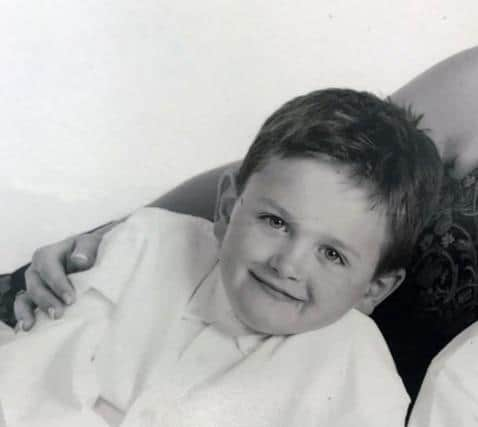
It was from this point that Sebastian’s family believes that different treatment decisions could have changed the outcome - meaning he would still be alive today.
He was sedated with a drug called Propofol. It is widely used but due to its formulation including triglycerides, a type of blood fat or lipid, studies have linked it to causing pancreatitis in rare cases and also leading to hypertriglyceridemia.
Dr Crew, a retired consultant anaesthetist, says it was not an appropriate choice for a patient already suffering with pancreatitis. He argues a widely-used alternative sedative called Dexmedetomidine could have been used instead but was not commonly used in the Harrogate hospital.
Sebastian received Propofol in high doses for 11 days to keep him sedated. While National Institute for Health and Care Excellence guidelines on Propofol recommend that blood-lipid concentration should be monitored if a patient is sedated for beyond three days, it was not until his ninth day under sedation that testing was done.
Dr Crew says the test showed Sebastian’s blood lipid level at 15,000mg/L – ten times above a ‘normal’ reading. “Combined with the pancreatitis, I think this treatment actively prevented the pancreas from improving or getting better,” he says. “They were using the wrong sedative.”
On May 8, Sebastian’s condition drastically deteriorated with his Propofol infusion stopped at 10am. But he tragically died the following morning.
The family are also concerned about delays in giving Sebastian a tracheostomy which would have allowed for the removal of the endotracheal tube being used for ventilation and requiring sedation to keep in place.
Adrienne says after initially being told it would take place on May 6 it was postponed twice and rescheduled for May 10. But Sebastian died on May 9 before the operation could take place.
The trust subsequently wrote that its position is Mrs Erkulis had initially been told a tracheostomy would “likely be performed around Day 10” (May 7) of his stay. One was subsequently booked for Day 13 of his stay (May 10) but he died the day before. The trust said the planned timing of the operation was “in keeping with standard practice” and there was no clinical record entry to suggest the operation had been “delayed, postponed or rescheduled” once the decision to go ahead on May 10 had been made.
Dr Crew says he believes Sebastian may have been able to survive if the tracheostomy had been carried out earlier and his sedation then reduced to a negligible level.
In light of the family’s concerns, Harrogate and District NHS Foundation Trust commissioned a specialist consultant from Newcastle to assess the care provided.
The consultant produced a 12-page report in January 2020 which determined the care provided to Sebastian was “appropriate” and the standards of monitoring “acceptable”.
The report added that post-mortem findings were “in keeping” with a cause of death being acute fulminating pancreatitis due to chronic alcoholism.
It said general advice to clinicians is that alternative sedatives should be considered over prolonged infusions, while some reviews suggest the use of Propofol should be limited to 48 hours. However it added that Propofol infusions “are commonly used well beyond a 48 hour window” in the UK.
The assessor said that “significant attempts” were made to use other sedative agents but doing so was causing “severe, profound agitation” in Sebastian which was impeding ventilation in an “immediately life-threatening” way.
The report does list Dexmedetomidine as among potential alternative sedatives but states that the hospital’s treatment strategy “was in keeping with many other specialist critical care units in the UK”.
The report said the exact cause of Sebastian’s deterioration “cannot reasonably be defined”. The assessor added: “In my opinion it is not possible to comment on whether or not Propofol contributed to a further worsening of Sebastian’s already established acute necrotising pancreatitis.”
He said that in his view Sebastian had been treated in “an entirely reasonable manner” and there was “no other course of action” staff should have taken.
He said: “Whether or not any possible adverse side-effects of the use of Propofol did or did not contribute to an exacerbation of the pancreatitis is of less clinical significance than the clear clinical indication for its use.”
But Dr Crew says the review’s limited terms of reference meant the issue of the tracheostomy delay was not considered while hypertriglyceridemia – which the family believes contributed to Sebastian’s death – was only covered by a single paragraph.
That read: “Hypertriglyceridemia is a rare but well known cause of pancreatitis. Raised triglycerides are more common in men, those with morbid obesity and those with a known history of alcoholism. High-dose of Propofol may contribute to raised triglyceride levels.”
Dr Crew said the assessor’s failure to give a view on Sebastian’s high blood lipid level raises questions as to whether he was aware of the reading. When The Yorkshire Post put the question to Harrogate and District NHS Foundation Trust, it did not provide a specific reply.
A period of questions and answers between the family and trust about the review took place, eventually leading to a meeting between in July 2021.
In the interim, the local coroner wrote to the family in April 2021 to note the forthcoming meeting with the trust and set out a view that “there is nothing further for me to investigate based on the information I have seen”.
The trust wrote to the family in September 2021 outlining its position on the planned timing of the tracheostomy. It also said the hospital’s practice for Propofol is mirrored across West Yorkshire, with all critical care units using it for periods of over 48 hours and without routine testing of levels.
This led Dr Crew to contact the Parliamentary and Health Service Ombudsman that month in an attempt to get an “unbiased opinion” on the case.
But in February 2023, the family was dealt a further blow when the Ombudsman determined it would not investigate the complaint as it was submitted after its time limit of one year from an incident.
The PHSO stated that the reasons for delay were Dr Crew’s attempts to go through the information about Sebastian’s case, including speaking to experts from different hospitals.
It added the family had also found the trust would also take a “long time to respond” to questions, with delays attributed to the pandemic. But the PHSO said it believed there had been “several periods” where the family could have contacted the Ombudsman despite the local resolution process still being ongoing.
It concluded: “We fully empathise with the position they were in and the steps which they have taken. We can see how much work they have put into understanding the events, what happened and why they do not want anyone else to have the same experience. Our decision is not intended in any way to detract from this.”
Dr Crew wrote back to the Ombudsman, saying the “arbitrary” time limit acts against claims which require confirmatory work or are subject to delays in correspondence from hospitals.
The pair say further recent correspondence with the coroner has gone unanswered and they feel they have nowhere left to turn in their search for answers.
A Harrogate and District NHS Foundation Trust spokesperson said: “We wish to again offer our deepest sympathies to the family and friends of Sebastian Erkulis. We have met with Sebastian’s family on a number of occasions since his death to respond to their concern.
“An independent external review was commissioned by HDFT which found that the care and treatment he received was appropriate. We take all complaints and concerns very seriously and we are committed to delivering high quality and safe care.”
In response to the trust’s statement, Adrienne says she only met trust officials on one occasion.
She says the death of her son and what has transpired subsequently has had a major impact on her.
"We believe that his death was avoidable,” she says.
“I had to take a year off work with post-traumatic stress. I’m a counsellor and psychotherapist and I just went into myself.
"I would always consider that I have always been quite optimistic about life. Things like driving past the house Sebastian was going to move into is too hard, I have to go a different way. Things like Christmas and his birthday are so hard.
"I trusted the hospital with my son’s life. All I would like is an apology and lessons to be learnt.”