
Yorkshire Water's alarm as this week's heatwave impacts on North Yorkshire's water levels
Yorkshire Water has issued a new warning on water shortages as temperatures soar today across North Yorkshire.
With the east coast including Scarborough hitting 26c and Harrogate seeing 30c, holiday-makers and visitors attractions may be happy but Yorkshire Water is not.
The arrival of this week of the fourth heatwave of the summer means it is even more important for residents to continue saving water.
After a period of dry, warm weather, England is now suffering from "nationally significant" water shortfalls and this is no more so than in North Yorkshire.
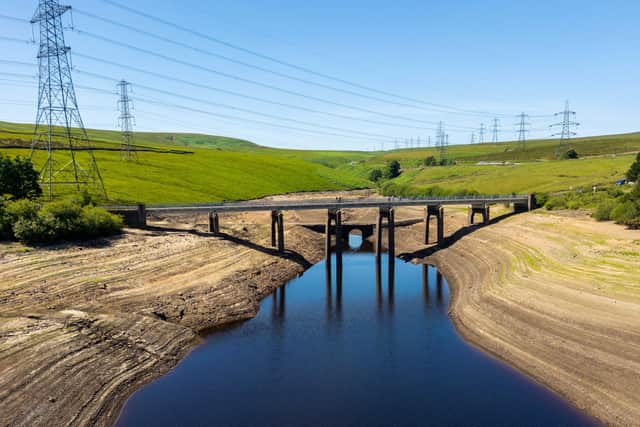

In June, the Environment Agency officially declared a drought across Yorkshire as a whole, which was followed shortly afterwards by the introduction of a hosepipe ban in the county.
Today, Yorkshire Water warned that reservoir stocks are still falling despite customers’ efforts to save water.
Dave Kaye, director of water at Yorkshire Water, said: “We’ve seen a fantastic response from our customers since introducing the hosepipe restrictions – from them putting the hosepipes away and fixing leaky loos, to installing water butts and reporting leaks they see in the street to us so we can repair them as quickly as possible.
“Despite the reduction in water use and leakage being at its lowest ever level following our leak repairs, reservoir stocks dropped over the last seven days to 42.2%, well below the average of 74.8%, and the lowest they have ever been at this time of year after an extremely dry 2025.
“With the hot weather ahead of us we’re asking customers to keep going with their efforts to save water as everything we do know will help to protect water supplies and the environment.”
Since hosepipe restrictions were implemented on July, 11 domestic water usage has decreased by 10% - which is the equivalent to 35 million litres per day in cooler temperatures and 70-80 million on hotter days.
Average water demand over the last seven days in Yorkshire has been almost 1.3 billion litres per day, resulting in a drop in reservoir stocks to 42.2% - well below the average of 74.8% at this time of year.