
Yorkshire Dales Rivers Trust to tackle heavy metal pollution in water in the Nidd
Yorkshire Dales Rivers Trust has launched twin projects to tackle heavy metal pollution in water in the Nidd and Swale caused by Nidderdale’s industrial heritage.
The bitter legacy of the Nidderdale area’s historic role in the lead mining industry, the new initiative sees the Yorkshire Dales Rivers Trust working with partners in the Water and Abandoned Metal Mines (WAMM) Programme (Environment Agency and the Mining Remediation Authority).
Following the success of metal mine pollution remediation projects in Teesdale, the YDRT is turning its focus on the effect of abandoned lead mines on Ashfoldside Beck, located in a popular walking area near Pateley Bridge, and Barney Beck, located in Teesdale.
Yorkshire Dales Rivers Trust ’s project manager, Tim Longstaff who oversaw the project in Teesdale and is now managing project delivery for Barney Beck in Swaledale, said: “While the last lead mines closed more than a century ago, remains of spoil heaps and drainage tunnels (adits) are leaching heavy metals such as lead, cadmium and zinc into watercourses.
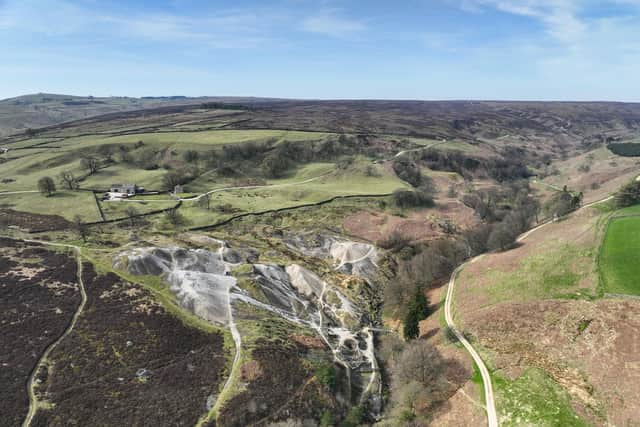

“When it rains, heavy metals wash into the river from the mine waste, contaminating the water and harming the surrounding ecosystems and wildlife
"Nearly 150km of rivers in Swaledale are impacted -and we are working on Barney Beck, which is one of the most polluted.
"We have also started a project on Ashfoldside Beck in the Nidd Catchment, where 44km of the river is impacted by heavy metal pollutants."
Both the Nidd and Swale catchment projects support the government’s Environment Act target to halve the length of rivers polluted by harmful metals from abandoned metal mines by 2038
The techniques being used build on those developed over the last two years on successful metal mine pollution remediation projects in Upper Teesdale, including an innovative hydroseeding technique developed with Terraffix Soil Solutions to establish new vegetation.
The work in Teesdale is funded by the Department for the Environment, Food and Rural Affairs (Defra) through the WAMM programme.
The feasibility study at Ashfoldside Beck is joint funded through WAMM and the DEFRA Water Restoration Fund and is being delivered with support from Nidderdale National Landscape.