
Plea to pregnant Harrogate women to support new initiative to improve the health of children and families
Pregnant women in Harrogate are being urged to sign up to a new scheme with the ultimate aim of improving local services.
The appeal follows a decision by Harrogate and District NHS Foundation Trust (HDFT) to join Born and Bred in (BaBi) – a network of local birth cohort studies designed to find out what influences the health and wellbeing of families and help reshape local services.
The BaBi concept began in Bradford, where it is part of the world-leading ‘Born in Bradford’ research programme.
The network now consists of 11 trusts, including Bradford, Leeds, Wakefield, Doncaster, East London, Nottingham, Warwick, Tameside, Hull, York and Scarborough.
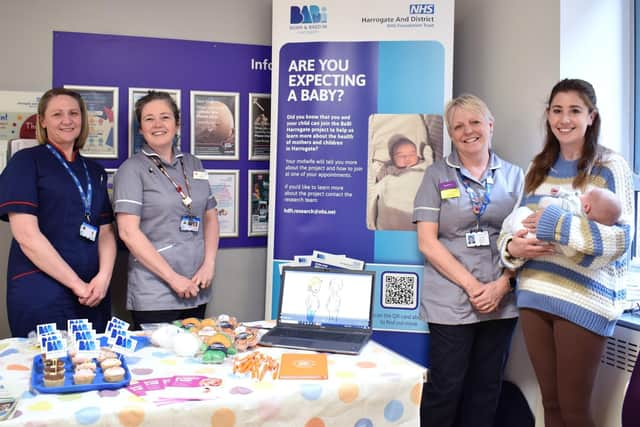
As part of the project, prospective mums across the Harrogate district are being invited to take part in the study during pregnancy by their midwife.
If they wish to participate, health researchers then link together routinely collected data from parent and child, such as such as blood pressure measurements during ante-natal appointments, or the details of baby’s height and weight recorded by health visitors, to see how health, care and services could be improved.
One of the first local mums to sign up to be part of the BaBi Harrogate study is Georgina Fogarty, whose son, Freddie, was the first BaBi Harrogate baby.
Georgina said: “Babi Harrogate is a great research project, providing helpful data that will help us to learn more about the health and care of mothers and babies living in the district.”
Explaining the benefits of the project, Georgina and baby Freddie’s midwife, Susan Wallace, said the population growth made it even more important for pregnant mums to take part.
“Harrogate’s population is constantly growing, and there are lots of new houses being built across the area.#
"By doing this work now, we will be helping everyone in the long run.
"It’s really easy to sign up and only takes two minutes to go through the form with your midwife during one of your routine appointments.”
The new research may identify relationships between things that happen in pregnancy and a child’s future health, or highlight if childhood conditions are more prevalent in one particular area of the district.