
New way to experience historic Fountains Hall at UNESCO-listed Fountains Abbey
For the first time in more than a decade, a stunning part of historic Fountains Abbey near Ripon is now fully open to the public.
Visitors are being invited by the National Trust to explore how Fountains Hall, often overshadowed by the abbey ruins, was for 300 years, the true heart of the UNESCO-listed Fountains Abbey and Studley Royal estate.
Built partly from the ruined stone of Fountains Abbey, the Hall bridges the turbulent years between the Dissolution of Fountains Abbey and the 18th century heyday of Studley Royal.
Across its 400‑year history, Fountains Hall has served as a manorial court, a Catholic chapel, a family home and later accommodation for estate workers.
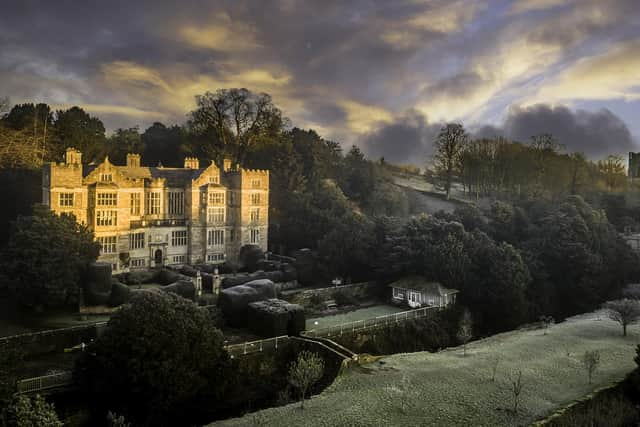

Its rooms have witnessed political upheaval, religious tension and generations of everyday life, yet the Hall has long been overshadowed by the dramatic abbey ruins nearby.
Through expanded access, the return of a significant portrait and a new visitor experience supported by a new cohort of room guide volunteers, the National Trust is shining a spotlight on Fountains Hall as a place of people, stories and lived experiences.
New features for visitors to enjoy
Newly-opened spaces at Fountains Hall with new interpretation
The return of the Mallory portrait
The large‑scale portrait of Sir John Mallory and his family, owners of Studley Royal from the 1400s, is returning to Fountains Hall after nearly five decades.
When the estate came into the care of the National Trust in the 1980s, the painting was in a fragile condition and was transferred to Beningbrough Hall for safe keeping.
Following months of conservation by Critchlow and Kukkonen Ltd, the portrait has now been returned to the Fountains Abbey and Studley Royal estate and is hanging in the Great Chamber of Fountains Hall.
New interpretation, Petals of the Past
The history of Fountains Hall can be explored through floral installations designed by Anice Neville.
The beautiful arrangements highlight the stories of those who lived here, from the Gresham family, who built a small hunting lodge on the site of the Hall, to the Vyner family, the last private owners