
New anti-flooding scheme in Harrogate as Yorkshire Water installs 200 sustainable drainage systems


Harrogate schools are among those chosen by Yorkshire Water for a new way of reducing flooding risks
Yorkshire Water has installed 232 free sustainable drainage systems (SuDS) into schools across the county to help prevent storm water discharges to watercourses by slowing the flow of rain entering the sewer network.
In partnership with Sudsplanter Ltd and Rescue 2, the utility giant has installed SuDS in areas where Yorkshire Water has been improving the sewer network and reducing discharges as part of a £180m investment to improve Yorkshire’s combined sewer overflows.
The schools in the Harrogate district taking part include:
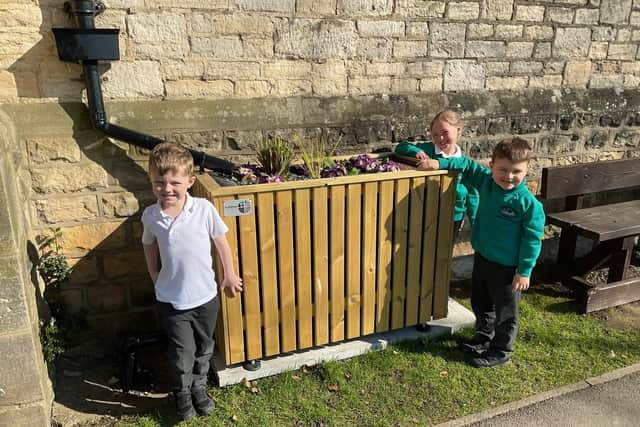
Beckwithshaw Primary School
Kettlesing Felliscliffe Primary School
Killinghall CE Primary School
Pannal Primary School
Ripley Endowed Church of England Primary School
St Cuthberts CofE Primary, Pateley Bridge
Omair Khan, lead project manager at Yorkshire Water, said: “Some schools were chosen based on their proximity to an investment project to reduce the volume of rainwater entering combined sewers.
“As a result, slowing the flows of rain and surface water into the sewer network, will reduce the frequency and impact of storm discharges on nearby watercourses.”
SuDS are nature-based solutions which capture rainwater run-off from buildings by re-routing the downpipe from the roofs into the planter, thus mimicking how water naturally drains through the environment.
The water is then stored in the planters where plants can soak it up, and any remaining water is then released slowly back into the drains, reducing the risk of overwhelming sewer networks which can lead to flooding.