
Key role in London protest by Harrogate man prompts new response from global drinks giant
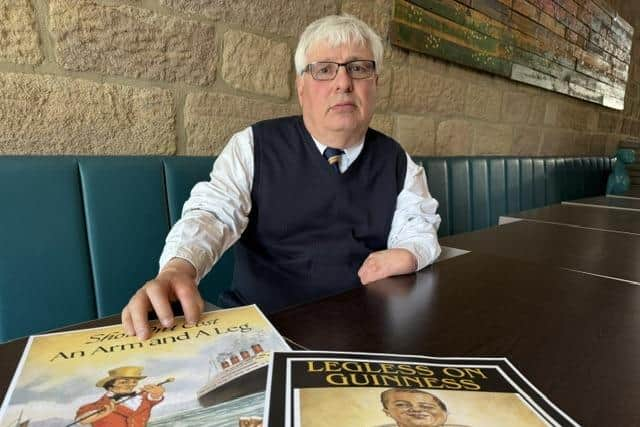
A Harrogate man who is one of only 415 Thalidomide survivors in UK and has been a campaigner for 25 years has playeda key role in a hard-hitting London protest.
Over the last quarter of a century, Harrogate businessman Guy Tweedy - who was born with shortened arms and fingers fused together as a consequence of his mother taking the anti-morning sickness drug Thalidomide - has helped secure hundreds-of-millions of pounds from the Government for the ongoing care of fellow survivors.
As a founding director of Thalidomide Voice, today sees Mr Tweedy spearheading a protest outside Diageo headquarters on Great Marlborough Street in London.
The UK’s remaining 415 Thalidomide survivors are demanding urgent action from the global drinks corporation over, what they say is, an “unresolved historical debt”.
But Diageo says it “inherited the thalidomide legacy in 1997” and, since then, “have taken our role very seriously”.
Meanwhile, The Thalidomide Trust has issued a statement backing up Diageo’s viewpoint.
The whole issue goes back to the late 1950s and early 1960s, Diageo's predecessor, Distillers, marketed Thalidomide as a safe treatment for, among others, pregnant women.
Campaigners like Guy Tweedy argue this was not tested thoroughly.
Thousands of babies suffered catastrophic and irreversible injuries in the womb. Many more did not survive.
Now in their mid-sixties, the thalidomide survivors face rapidly worsening health caused by decades of physical strain and disability.
Campaigners say Diageo generates around £3 billion in annual profits, while reportedly committing £50 million for Guinness sponsorship of the Premier League.
They argue that a fraction of the company’s wealth could secure dignity and support for survivors for the rest of their lives.
“After 60 years, we want full recognition of the dignity we have been denied,” said Thalidomide Voice Chair, Mikey Argy. “
"We have lived not only with physical trauma but with lifelong stigma and exclusion.”
Thalidomide was a drug developed and marketed by German pharmaceutical company, Chemie Grünenthal in the 1950s.
The company marketed the drug as a safe sedative, including for pregnant women.
Because of inadequate testing, thousands of babies were born with severe physical disabilities, such as shortened limbs and facial defects
Many didn't make it to full term, others died immediately after birth.
It was withdrawn from the market in December 1961.
Deborah Jack, Chief Executive, The Thalidomide Trust: “As the only national charity supporting all UK Thalidomide survivors, we are in contact with over 90% of UK Thalidomide survivors and have a unique understanding of how their needs are escalating as they age, and the increasing challenges they are now facing.
"We are in frequent dialogue with Diageo, who have never sought to avoid their obligations under the Covenant, including some already scheduled meetings over the next few months which will include beneficiary representatives.
"The role of the Trust is to make sure the widest possible range of voices are heard so that the needs of all those living with the impact of thalidomide are properly represented, rather than a vocal minority group representing narrow self interest.
"We believe it is essential that we talk to Diageo with one voice and are disappointed that Thalidomide Voice have chosen to take this action, without the support of the majority of the thalidomide community.”
A Diageo spokesperson said: “Since Diageo inherited the thalidomide legacy in 1997, we have taken our role very seriously.
"Through our engagement with the Thalidomide Trust, we will continue to take that approach.
“We have a long track record of working with, and supporting the Trust, in their efforts to ensure that the long-term care and financial support for people injured by thalidomide is secure.
“We have regularly increased our financial contributions to the Trust to reflect the changing needs of its members.
"In the last 10 years an additional £58 million has been paid out directly to beneficiaries.
"This is in addition to the annual payments, and we have also provided significant targeted funding for support where we have been told beneficiaries need this.
"We have set aside funding until 2037 to ensure that long-term financial support remains.”
Information on Thalidomide Voice: www.thalidomidevoice.org