
Harrogate school head's 'total joy' after remarkable year for Duke of Edinburgh’s Award
A Harrogate secondary school is celebrating a record number of students completing their Duke of Edinburgh’s Award.
In total 172 students from Harrogate Grammar School have taken part in expeditions and activities across Bronze and Gold levels in what has turned out to be a remarkable year.
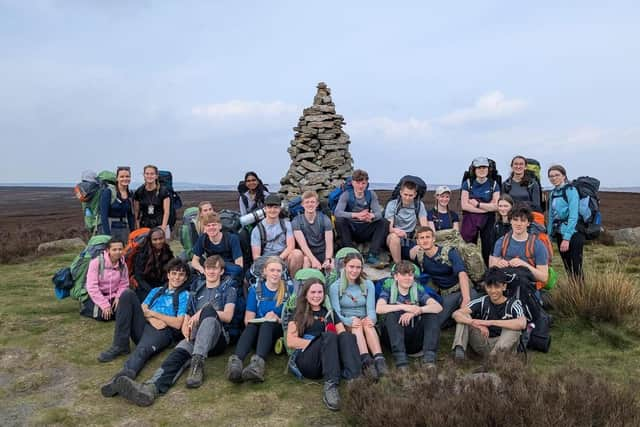
Completing their Bronze Award expeditions were 146 Year 10 students who undertook two expedition weekends in the Yorkshire Dales, building confidence, resilience, and teamwork skills.
Meanwhile, 26 Year 12 students worked towards their Gold Award with their practice expedition taking place in the Yorkshire Moors, finishing at Robin Hood’s Bay.

As part of the Duke of Edinburgh’s Award requirements, students not only commit to a skill or physical activity, they also volunteer in the community.
This year, Harrogate Grammar School students gave an impressive 1443 hours of volunteering to the local community, with an estimated social value of £9,234.
Neil Renton, Headteacher of Harrogate Grammar School, said: “It has been a total joy to see our students out of the classroom enjoying these shared experiences together.
"They have stepped out of their comfort zones, supported one another, and gained life-changing skills that go far beyond any expedition.
"Colleagues at HGS have really gone the extra mile to create this opportunity and we are incredibly proud of what our students have achieved.”
Harrogate Grammar School remains committed to providing opportunities like the Duke of Edinburgh’s Award to equip students with the confidence and skills they need to thrive in life beyond school, helping them to fulfil our school values of adventure and excellence.
The Duke of Edinburgh’s Award, which was first launched in In February 1955 by Prince Philip, involves young people undertaking a series of self-improvement exercises to a high standard.
In the post-war era, His Royal Highness wanted to help boys bridge the gap between leaving formal education at 15 and entering National Service at 18.
Initially, the pilot only involved national voluntary youth organisations.
But The DofE evolved over the decades and, in 1980, the age range was extended to include any young person aged 14 to 24.
More information: https://www.dofe.org/