
Harrogate International Festivals boss talks about her public role and financial challenges facing the arts
If anything sums up the roots of Harrogate International Festivals’ success over the last decade it's the reaction of its chief executive after being honoured at the recent Harrogate Business Awards.
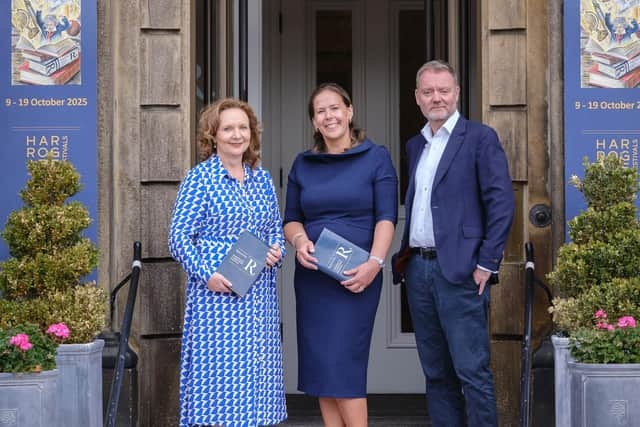
Talking about her receipt of the Judge's Choice in an event which was first launched by the Harrogate Advertiser in 2005, Sharon Canavar didn't exactly shrug off the accolade but there was a steely reluctance to revel in it.
"Because of my role, I have to be seen, I have to turn up at events, I have to have a public role," she said.
"But lots of people work very hard in the arts in this town.
"Civic pride is what makes Harrogate really special.
"We are lucky to live in a town like this."
Since she first stepped into the role in 2009, the ultra hard-working Sharon Canavar has transformed the festival, in the course of which she herself has evolved into a pivotal figure in the arts scene, in a manner more organic than by design.
Rather than being a summer event as its founders had originally envisaged when they established it in 1966, under the chief executive's strong hand the festival has become Harrogate International Festivals plural.
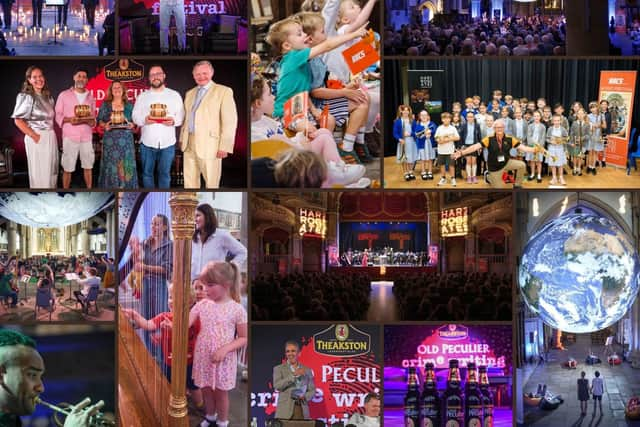
Rather than being one big intensive splurge of the arts over the course of a few weeks, the new chief executive has turned it into a series of stand-alone events dotted across the calendar year.
In changing how the festival operates, Sharon Canavar has also transformed its fortunes, though she would be first to say that all of this progress has been a team effort.
The likes of Theakston Old Peculier Crime Writing Festival, Harrogate International Sunday Series, HACS Harrogate Music Festival and the current Raworth Harrogate Literature Festival have not only spread the financial risks for the festival, they have helped it attain national standards and win a reputation beyond Harrogate itself.
The tight focus of the festival also enabled it to survive the trials of the Covid lockdown where other arts events in the UK faltered or went under.
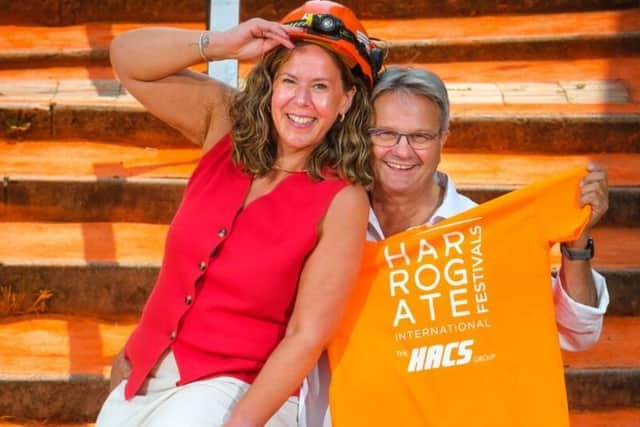
With the likes of Nicola Sturgeon, Graham Gooch, Lyse Doucet, Dom Joly and Sir Jeremy Hunt in town this week as part of Raworths Harrogate Literature Festival, there is much Harrogate International Festivals can be proud of.
But as the financial landscape for the arts in Britain darkens, it feels like new clouds may lie on the horizon for Harrogate International Festivals' not of its own making.
The ultra-positive chief executive says the festivals' success now faces an era of uncertainty.
Ironically, part of Harrogate International Festivals’ potential new vulnerability lies in its own achievements forged on a strategy few other arts charities or events in the rest of Britain have been forced to adopt.
In the case of Harrogate, because of circumstances unique to what the rest of the world regards as an island of affluence, the three pillars of arts funding do not quite apply.
By that is meant the following:
1 Earned income from ticket sales.
2 Earned income from sponsorship.
3 Public funding and local authority support.
"The scary thing,” said Sharon Canavar, “is Harrogate International Festivals’ reliance on the first two pillars.
"A total of 80% of our revenue comes from sponsorship and ticket sales.
"For a smallish town like Harrogate, that is an incredible figure
"Those are risky elements and it means we always have to know our audience and judge it correctly at all times.”
What make the financial situation especially remarkable is that Harrogate International Festivals was once among the best publicly-funded arts organisations in the whole of the North.
But the ever-changing realities of the economy and politics have not been entirely kind to the town.
"The national trend in the arts is for 4.4% of your turnover to come from sponsorship,” said Sharon.
"Harrogate International Festivals stands at 24.4”%.
"These days the town’s name does not even appear on the Arts Council’s list of ‘Priority Places’ for funding.”
By any rights, while not quite putting its feet up or luxuriating in the glitz and glory of big names and packed houses at this week’s Raworths Harrogate Literature Festival, Harrogate International Festivals and its dynamic chief executive should at least be able to feel some satisfaction over the high quality and successful nature of the exceptional range of different festivals it is responsible for.
Instead, in these troubled and troubling times, the local government shake-up of two years ago which led to the abolition of Harrogate Borough Council and the creation of the larger unitary authority of North Yorkshire Council has introduced a new element of financial doubt for the town’s leading arts charity.
"It’s great that local authorities are still choosing to invest in culture in an era when social care, for example, is rightly so important,” said Sharon Canavar.
"But it would be lovely to have an understanding with North Yorkshire Council about where arts funding goes next.”