
Harrogate Civic Society's remarkable efforts to put town's 'forgotten hero' back in spotlight
Harrogate Civic Society is helping to shine a light on the life of Harrogate's lost musical genius who died on the Western Front in World War One.
Although still young when he died in 1918, Ernest Farrar left behind a considerable body of work, and was, possibly, the equal of Elgar and Vaughan Williams.
“I think that quite a possibility,” says renowned music enthusiast Andrew Hitchen, founder of the town’s highly-respected Wesley Chapel concert series.
“Although he was only 33 at the time of his death, Farrar left behind a significant body of work, compositions of great quality and beauty”.
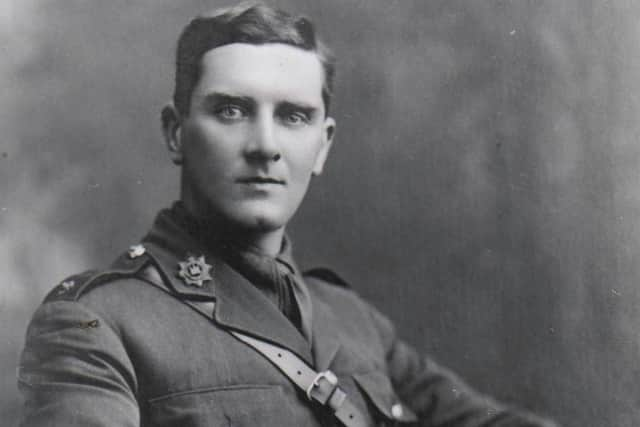

At the request of the Harrogate Civic Society, Andrew will be talking about Ernest Farrar, his life and work, at The West Park Centre, Victoria Avenue on Wednesday, November 19 at 7.30pm.
The event will also present a rare opportunity to hear, reproduced at concert quality, recordings of some of Farrar’s most spectacular orchestral compositions.
Farrar was born in 1885 in Lewisham but grew up in Yorkshire where his father was Vicar of Micklefield.
Educated at Leeds Grammar School and Durham University, he was awarded a scholarship in 1905 at the Royal College of Music.
After graduation, he became an organist at Dresden, before being appointed choirmaster and organist at St Hilda’s Church, South Shields.
In 1912 he moved to Harrogate where he took up post as organist at Christ Church, augmenting his income by teaching pupils, such as the youthful Gerald Finzi.
In August 1916 he started training with the Grenadier Guards.
It was during this period that he composed Heroic Elegy, perhaps, his most moving work, dedicated to his fellow servicemen.
Farrar conducted the first performance at Harrogate’s Royal Hall on July 3, 1918 but it was to be the last music he would ever hear.
On September 6, 1918, he was posted to France where, 12 days later, he was killed by machine gun fire as he was leading his men into battle.
To book a place at the talk, email [email protected].
The event is free to Civic Society members and attendees at the Wesley Concert Series.