
Extinction Rebellion Harrogate stages unusual protest in Knaresborough over water quality in the Nidd
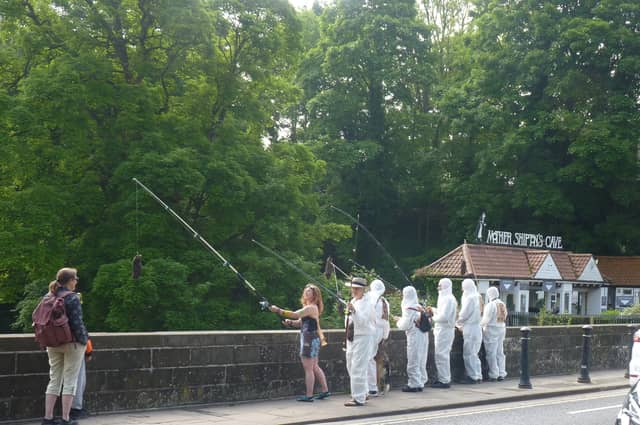

Extinction Rebellion Harrogate activists dressed in white overalls staged an unusual protest in Knaresborough over sewage discharges in the River Nidd.
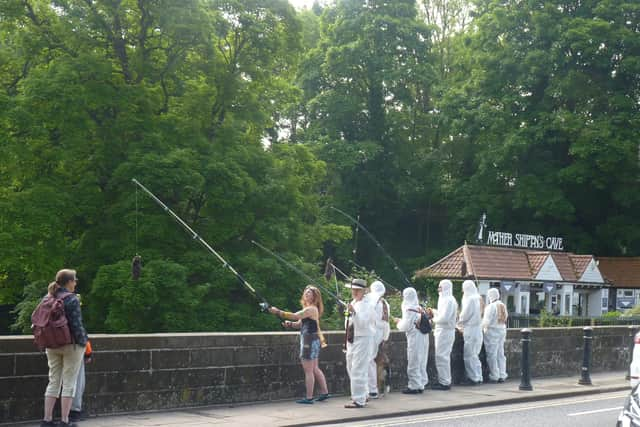
The unconventional venture saw members of the local group equipped with fishing rods take up positions on Knaresborough’s High Bridge on Saturday and pretend to fish the ‘poops’ out of the River Nidd.
On what was billed as a family-friendly protest, XR Harrogate not only distributed public health warning leaflets on pollution in the Nidd during their self-titled ‘Poo Patrol’ but, also, staged a pantomime to entertain young passersby.
The weekend’s protest comes shortly after Harrogate and Knaresborough MP Andrew Jones hailed a successful all-party campaign to win Bathing Water Status for a stretch of the river at the Lido in Knaresborough.
Although Mr Jones said the victory was a step forward for water quality, Bathing Water Status does not ensure the water is or will become clean.
Bathing Water Status means regular testing will be carried out on that part of the River Nidd from now to the end of September, with the results published by the Environment Agency.
Extinction Rebellion Harrogate has been working closely with River Nidd Action Group whose first meeting took place in Knaresborough in October 2022 after public concern over the impact of storm water overflows from sewage treatment works along the Nidd.
Earlier this year Yorkshire Water was forced to pay out £1 million after a past pollution incident in the Nidd, £500,000 of which will go to projects to improve water quality in the area.
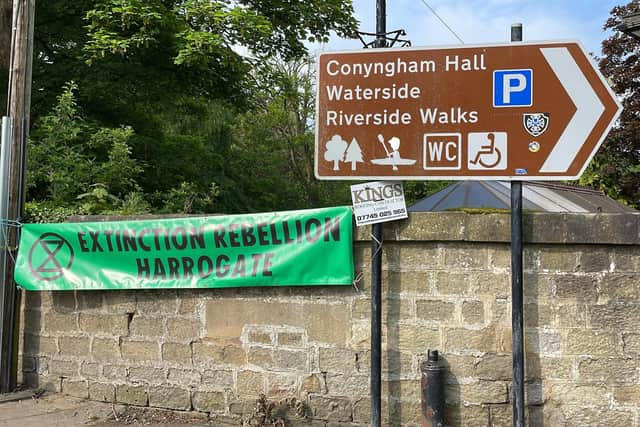
But both XR Harrogate and Nidd Action Group remain worried that insufficient action has so far been taken to prevent sewage contaminating the Nidd.
Anna Bryer, a 57-year-old horticulturist, said: "Testing the water is not in itself going to make it clean.
"This is a river that’s used for the Knaresborough Bed Race.”
In 2023, Nidd Action Group carried out extensive testing of the Nidd along the course of the river all the way to where it meets the River Ouse.
The group’s results showed high levels of E.Coli, nitrates, phosphates and mercury throughout the river.