
Dr's Casebook column with Dr Keith Souter: Toothpaste, ketchup and why walking can prevent stiffness and back pain


Back pain is extremely common. In the UK today more than 2.5 million people regularly experience back pain. Eighty per cent of people will experience at least one episode of back pain at some stage in their life.
Research from Norway suggests that simply walking every day is the most effective way of preventing lower back pain and stiffness.
In a study of over 11,000 people they found that people who walk more than 100 minutes every day have almost 25 per cent lower risk of lower back problems than those who walk 80 minutes or less.
Many people complain of muscle stiffness and tend to avoid exercise as a result. In fact, exercise of all types, but simple walking for up to 100 minutes a day will tend to get rid of it.
Muscles are made up of muscle fibres. Each muscle fibre is like a long bag packed with smaller filament-like structures called myofibrils. It also contains a gel like fluid called the sarcoplasm.
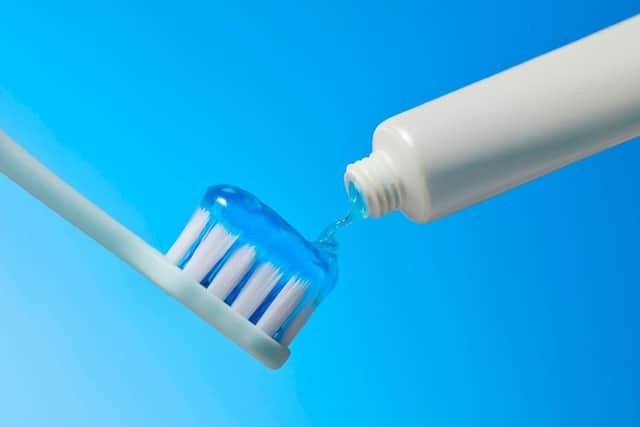
Now let me explain about a physical property called thixotropy. This is the property that some gels or fluids have to become less viscous, less thick, when they are agitated or subjected to a shearing force. Upon standing they can return to their original viscosity. If you think of toothpaste in a tube, it is a gel inside the tube, but when you compress the sides, it turns into a semi-fluid and oozes out of the tube, then resets on the toothbrush. That is why those droplets of toothpaste landing on clothing are such a nuisance, because they turn semi-solid again.
In a similar manner tomato ketchup when the bottle has been opened becomes a semi-solid. A half full bottle can be an irritation, because it simply will not pour. But if you tap the bottom of the bottle several times it will suddenly change from a semi-solid into a semi-liquid and a great dollop will come out.
Yet another example is quicksand. Heaven forbid, but if you ever happen to find yourself in it then you have to limit movement, because thrashing about makes this thixotropic substance become more fluid and you will sink!
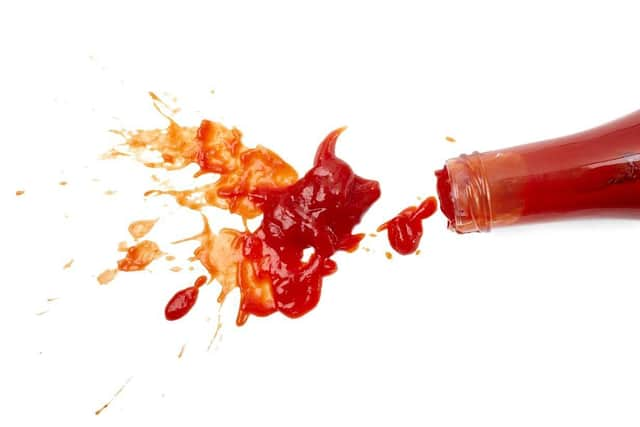
So, what has all this to do with muscles? Well, the sarcoplasma, the fluid in the myofibrils is thixotropic. It can be semi-liquid or it can become quite viscous, or gel like. If you think of a muscle’s structure as being like a bundle of long thin balloons filled with a substance like ketchup. When they are active, the ketchup becomes semi-fluid and it moves well and it produces a flexible ‘muscle.’ When it is inactive and not used, it becomes like the semi-solid ketchup that you see in an opened ketchup bottle. It is stiff and won’t move well. But again, if you move it about, agitate it, it will become fluid again and flexible.
This seems to be one of the mechanisms of muscles stiffness. And so please note, inactivity is the muscle’s enemy. It makes it go stiff. Walking reduces it, so another reason to enjoy your walks.