
Yorkshire Water announces hosepipe ban following driest and warmest spring on record
Yorkshire Water has announced hosepipe restrictions to protect water supplies and the environment, with forecasters predicting a warm summer ahead.
This year, Yorkshire has experienced its driest and warmest spring on record, with only 15cm of rainfall between February and June - less than half the average expected.
In June, the Environment Agency officially declared a drought across the region, raising concerns about water availability during the coming months.
The prolonged dry and hot weather has driven a sharp increase in water demand.

Between April and June, Yorkshire Water supplied an extra 4.3 billion litres of water compared to a typical year - enough to supply the city of Leeds for five weeks.
As a result, reservoirs currently hold just 55.8 per cent of their capacity, which is 26.1 per cent below the usual level for this time of year.
To address the situation, Yorkshire Water has been managing water supplies carefully, moving water around the region and working to fix leaks.
These efforts have reduced leakage to the lowest level ever recorded in Yorkshire.
Customers have also been encouraged to save water, such as using water butts to catch rainwater for use in the garden, or cutting down the length of time spent in the shower.
Despite these efforts, further restrictions are now necessary to conserve water.
Starting on Friday, July 11, temporary hosepipe bans will come into effect as part of Yorkshire Water’s drought plan.
These restrictions will help reduce water demand, protect reservoir levels, and enable the company to apply for permits allowing alternative management of reservoirs and river water abstraction.
Dave Kaye, Director of Water at Yorkshire Water, said: “We need to take action now to help conserve water and protect Yorkshire's environment.
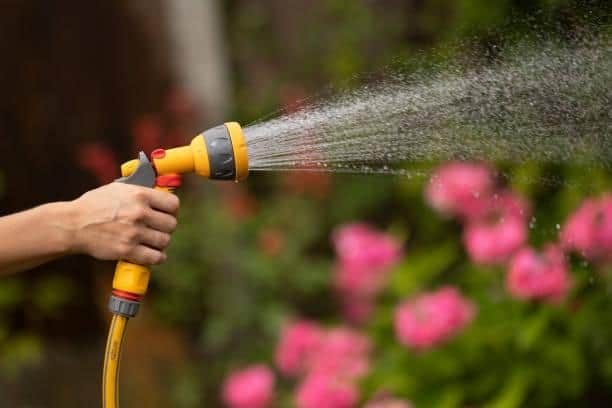
"That means from Friday (July 11), people across Yorkshire will need to stop using their hosepipes to water their gardens, wash their cars or for any other activities.
“Introducing these restrictions is not a decision we have taken lightly, and we’ve been doing everything we can to avoid having to put them in place.
“Our region experienced an extremely dry spring, which resulted in the region entering drought status in June.
"Usually, spring is a time when our groundwater sources and reservoirs continue to be topped-up by changeable weather, but this has not been the case in 2025, with our reservoir stocks falling since the last week of January.
“Of course, we have seen a few periods of changeable weather more recently, which helped slightly with the water resources picture.
"But these have been followed by constant high temperatures and more dry weather, which causes increased water usage.
“We’re grateful to our customers, who have been saving water where they can this year already.
"It is really important that we all continue to do so.”
Activities that are not permitted while the temporary restrictions are in place include:
- Using a hosepipe to water a garden
- Using a hosepipe to clean private vehicles or boats
- Watering plants with a hosepipe on a domestic or other non-commercial premises
- Filling or maintaining a domestic swimming, paddling pool, hot tub or cold-water plunge pool with a hosepipe
- Using a hosepipe for domestic recreational use
- Filling or maintaining a domestic pond or ornamental fountain using a hosepipe
- Cleaning walls or windows of domestic premises using a hosepipe
- Cleaning paths or patios using a hosepipe
- Cleaning other artificial outdoor surfaces using a hosepipe
Residents can still water gardens or wash cars using tap water from buckets or watering cans.
Water collected from rainwater butts, grey water, or private boreholes is also allowed.
Businesses are permitted to use hosepipes only for essential commercial purposes, such as operational needs.
However, cleaning outdoor surfaces at business premises with hosepipes is not allowed.
Exemptions apply to blue badge holders, and customers on Yorkshire Water’s Priority Services Register or WaterSure tariff for medical reasons.
Dave added: “These restrictions are intended to make sure that we have enough supply for the essential needs of people across the region this year and next, as well as making sure we’re able to protect our local environment.
"With more dry weather forecast in the coming weeks, it is likely our stocks will continue to fall so we need to act now to maintain clean water supplies and long-term river health.
“Having restrictions in place also allows us to apply for drought permits from the Environment Agency, which means we can abstract more water from our rivers and reduce compensation flows out of our reservoirs so that we can continue to provide the water our customers rely on us for.
“The restrictions will come into effect on Friday, July 11 and will be in place until the region has seen significant rainfall to bring reservoirs and groundwater stocks back to where they need to be.
"This may last into the winter months, but we will lift the usage restrictions as soon as we are able.”