
Harrogate Heritage: The history behind our familiar street names
For almost twenty years from 1995, the eminent local historian Malcolm Neesam contributed a series of remarkable articles to the Advertiser. In association with Harrogate Civic Society, we are proud to publish a selection from the series. Here, Malcolm Neesam investigates the origins of the street names in Harrogate which are now so familiar to us:
This week, I am acting on a friend's suggestion that I write about the names of the town's streets. The subject is not an easy one to research, as some street names appear to have been determined either by whim or fashion.
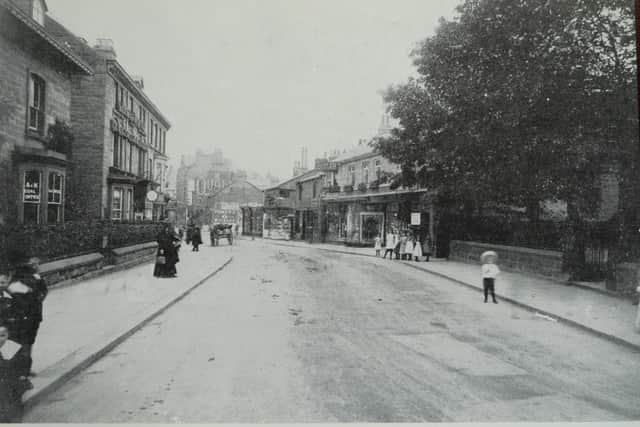

One decade may see the fashion for ecologically friendly names, such as Cowslip Close, Ox Grass Pasture or Spring Water Close.
Another decade may see a preference for names associated with national heroes, such as Nelson Road, or Scott Crescent, or great national events, such as Coronation Street, Jubilee Way or Parliament Square.
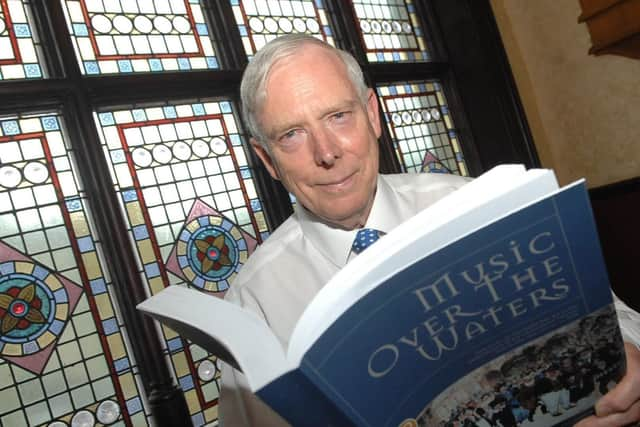
Developers often name the streets and roads of their estates after a favourite theme, such as cathedrals of England, the names of British birds (and they usually are British: for every Cuckoo Hill, Sparrow Alley or Thrush Close I have seen, I have never encountered a thoroughfare named after a penguin or vulture) or British trees.
In Harrogate, the oldest name is that of the town itself, the Anglo-Norse way to the hill of the soldier, or Harlow Gate, as the early Court Roll spellings put it.
The earliest surviving map of Harrogate, the 1587 map accompanying a Duchy dispute about land in Plumpton, contains the names of only two roads: the Great Broade Way leading to Harlow, which follows the route of the present Otley Road, York Place and Knaresborough Road; and Gammell Gates, which follows the route of the later West Park.
The Domesday Book of 1086 lists several Gammalls as holding land in the area, and the most likely explanation of the name Gammell Gates is the way to Gammell’s lands.
When the Duchy of Lancaster began to sub-let the Royal Forest of Knaresborough, of which Harrogate was part, the names of Duchy lessees, such as the Dukes of Devonshire, were used to name streets: Devonshire Place, (previously known as Silver Street), Chatsworth Grove and Cavendish Avenue came from this association.
The Duchy of Lancaster has never exerted pressure on the town for roads to be named after Duchy interests, although local developers themselves borrowed names with Duchy associations.
For example, when in the 1840s the Duchy began to look at the development of their Harrogate holding between Cold Bath Road, Otley Road, Beech Grove and Esplanade, they called it Red Bank, because of the ruddy nature of the clay-rich soil, but because the estate was known to be held by the Duchy.
Locals named it the Duchy Estate and exactly the same thing happened forty years later when the Duchy developed their Ripon Road estate, which locals promptly called the Duchy Estate.
When it came to the naming of individual roads on the Red Bank estate, the locals took names associated with the Duchy, such as Lancaster, Victoria and Queen's, and even Beech Grove came from the Duchy habit of planting beech trees round the fringes of their estates.
Later, David Simpson used names with royal associations for the Duchy’s Ripon Road estate, such as Kent Road, York Road, Brunswick Drive and Clarence Drive.
Parliament Street, originally the Ripon Turnpike Road, took its present name from the great Parliamentary Reform Act of 1832, and the narrower road running to the east of Parliament Street took its name from the Act of Union between England and Ireland of 1800.
In the centre of the modern town, which had been created in 1860, Chapel Street seems to have grown from the foot route from Low Harrogate to the Chapel of St. John in High Harrogate, whereas Cambridge Street seems to have been named after King George Il’s grandson, George, Duke of Cambridge.
This fact was forgotten in 1908, when the council changed the name of Chapel Street to Oxford Street, thinking that neighbouring Cambridge Street had been named after the English University!
The reign of King Edward Seventh was marked by King Edward's Drive, and the coronation of the new King George V by King’s Road, this last, at the specific request of the wealthy Mr Baxter of Knapping Mount, who paid for the widening of Walker Road in 1911.
Walker Road itself had before 1883 been known as Baker Lane, after Billy Baker who kept a small holding near today's conference centre on which he kept ducks and geese.
The above reference to Silver Street reminds me that Park Parade opposite, was once known as Paradise Row, a facetious name given because of the Methodist Chapel set up in1796 at 20 Park Parade.
The adjacent Regent Parade, once Harrogate's most important street, took its name from the Regency of 1811-1820.
This article was first published on November 15, 2012
A note from Harrogate Civic Society: It is now more than four years since Malcolm’s death. He left behind an astonishing body of work that we at the Harrogate Civic Society are determined should be preserved and enhanced for the benefit of future historians and, indeed, for the benefit of anyone who cares about Harrogate. Not long before his passing, we discussed with Malcolm and the Advertiser republishing at least some of his articles. Many of Malcolm’s articles dealt with the history of the town, exploring the people, places and events that helped to form the Harrogate we know today. At other times Malcolm concentrated more on contemporary issues. While acknowledging that Harrogate could not stand still, he was convinced that change should always be tested. In September 2024, the first re-publication of Mr Neesam’s articles appeared and this article continues the series. We are grateful to Malcolm’s family for their approval, to Simon Kent (closely involved with securing Malcolm’s legacy) for his work researching and preparing the articles for reprint, for the advice of historian Paul Jennings and to Graham Chalmers and his team at the Advertiser for their support and encouragement. We hope you will enjoy reading (or in some cases re-reading) these irreplaceable snapshots of history. If you are able to add to our knowledge, or wish to know more about our work, contact us at: [email protected]