
OPINION: Bill’s demise showed Parliament at its worst, says Harrogate MP Tom Gordon
The Assisted Dying Bill was Parliament at its best. Its demise was Parliament at its worst.
At the start of this Parliament, Assisted Dying was brought forward as a Private Member’s Bill. These are changes to the law proposed by an individual MP rather than the Government. As an issue of profound ethics and conscience, votes were cast according to personal conviction rather than along party lines.
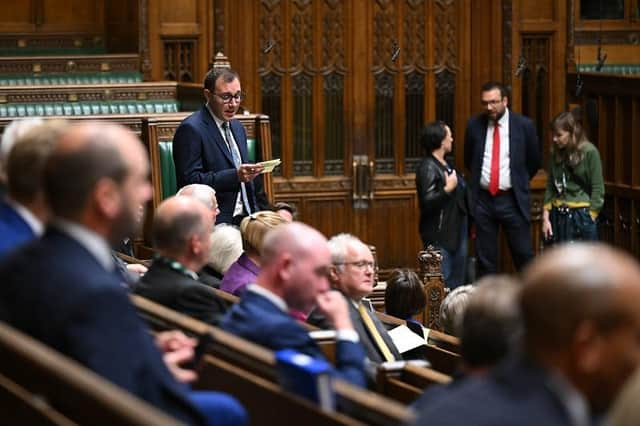

The open and thoughtful debate in the Commons was widely described as “Parliament at its best”. The conversations I had with constituents, and the work I carried out while serving on the Bill Committee, were certainly my job at its best.
Its demise in the House of Lords, however, has shown Parliament at its worst.

By the time the Bill reached the Lords earlier this year, it had become the most restrictive assisted dying legislation in the world, with safeguards beyond those found in any other country. Throughout the committee process, we carefully examined every aspect of the legislation, weighing questions of autonomy, dignity, coercion and medical oversight in painstaking detail.
The second chamber would normally be expected to provide considered scrutiny. Instead, the Bill was met with an onslaught of more than 1,000 amendments designed to filibuster and ultimately run down the clock on the parliamentary session.
Many of the amendments became increasingly absurd. One proposed preventing a person from leaving the country for up to 12 months before an assisted death, an unenforceable measure that could stop terminally ill people from taking a holiday abroad. Another would have required anyone seeking assisted dying, including men in their 80s and 90s, to take a pregnancy test.
Taken individually, these amendments undermine the principle of dignity and choice at the end of life, which more than 73 per cent of Britons support. Taken together, they raise serious concerns about the state of our democracy and the role of the House of Lords.
My party leader, Ed Davey, and I ultimately found ourselves on opposite sides of the debate. He voted against the Bill while I voted in favour. Yet we both agree that the Lords’ handling of this legislation has been deeply troubling and worryingly undemocratic.
The Lords can be a shining example of how expertise and experience improve legislation. But this year it has also shown how a small number of peers can choose to act as a roadblock when it suits them. The Government’s proposed reforms to the House of Lords must go further and ensure that a small, unaccountable group cannot obstruct legislation in this way again.
I doubt the Government will intervene to revive the Bill. For it to return, another MP would need to take it up and succeed in the already unlikely Private Members’ Bill ballot. After all the work and scrutiny that went into this legislation, its future has now been left to chance, with the unelected Lords still able to derail the democratic process once again.